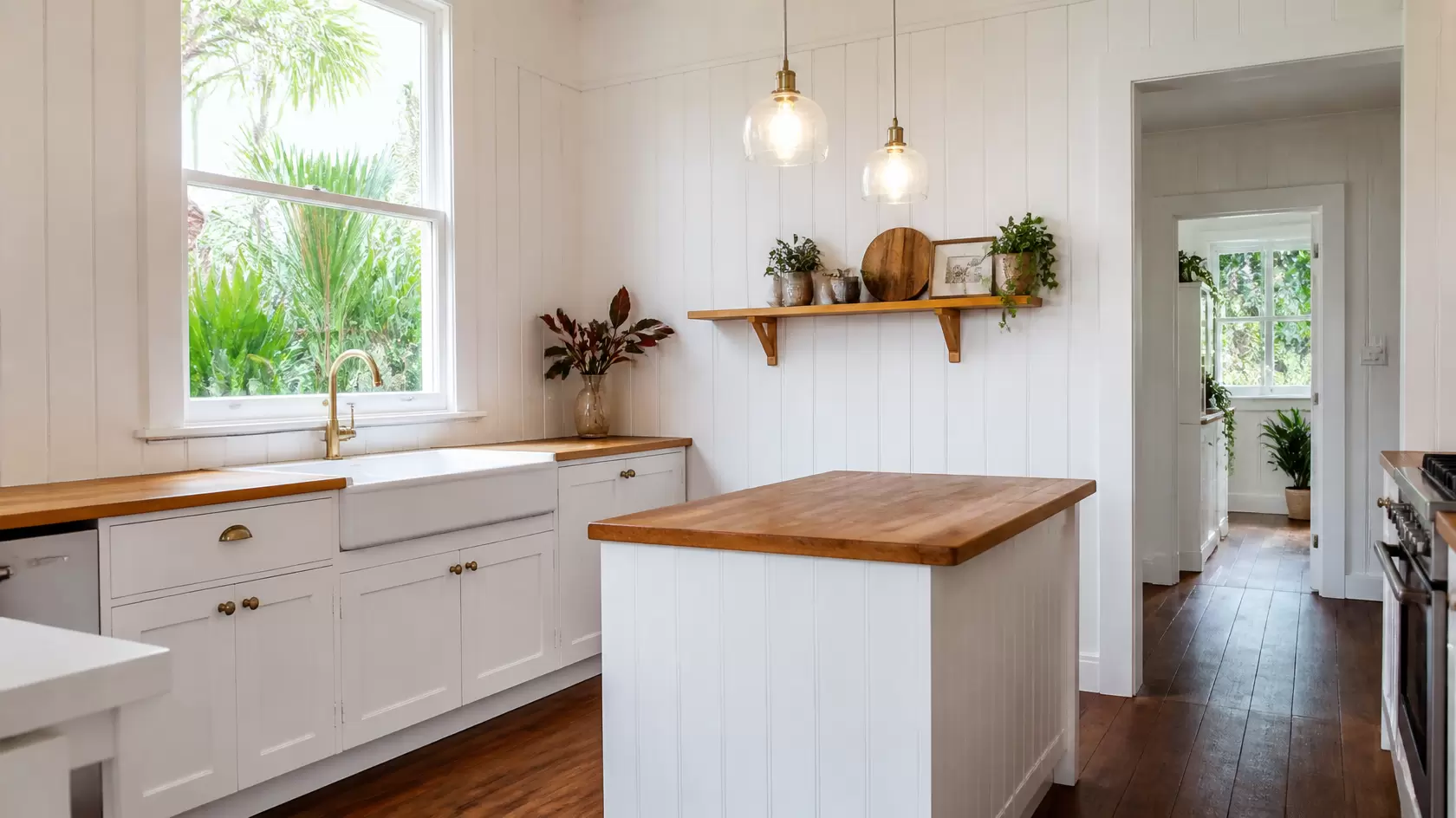

Buying a house and land package in Wilston requires a different financing structure than purchasing an existing property.
Most lenders treat these purchases as construction projects, which means your loan is drawn down in stages rather than as a single settlement. You'll need approval that covers both the land acquisition and the build, with the lender releasing funds progressively as the builder completes each phase. The timing, deposit requirements, and loan structure all differ from a standard owner-occupied purchase, and the differences affect how much you can borrow and what you'll pay during construction.
How Lenders Structure Finance for House and Land Packages
You'll typically need two separate contracts: one for the land and one for the construction. The lender assesses both, but releases funds in stages aligned with the building schedule. At settlement of the land component, you draw down that portion of the loan. Once the slab is poured, you draw the next portion. This continues through frame stage, lockup, fixing, and practical completion. Between each drawdown, you'll usually pay interest only on the amount already released, not the full loan amount.
Some lenders bundle the land and construction into a single approval, while others require separate applications. The difference matters because it affects how quickly you can move if you find a package that suits your needs. A single approval means one set of conditions and one settlement process for the land, with construction drawdowns following automatically. Separate approvals mean two assessments, two sets of conditions, and the possibility that your construction approval doesn't align with your land settlement.
In Wilston, where most new housing is infill development on subdivided blocks, you're more likely to encounter smaller builders and boutique packages rather than large-scale estates. This can limit your lender options, as some banks only work with builders who hold specific accreditations or insurance policies. Before you commit to a contract, confirm your intended lender will accept that builder.
What Deposit and Equity Requirements Apply
Lenders assess your deposit against the total contract price, including both land and construction. A 20% deposit avoids Lenders Mortgage Insurance and gives you access to better rates and more flexible loan products. If you're putting down less, LMI is calculated on the full amount, and some lenders will cap their lending at 90% or 85% for construction, even if they'd lend 95% on an established property.
Consider a buyer purchasing a house and land package with a total contract price at the lower end of Wilston's current market. With a 10% deposit, they'd need approval for the remaining 90%, plus enough liquidity to cover the initial land settlement costs, building insurance, and interest payments during construction. Some lenders release 100% of the land portion at settlement, while others hold back 5% to 10% until the house reaches practical completion. That holdback can create a cash flow issue if you're relying on the full loan amount to settle the land purchase.
If you're a first home buyer in Wilston, the First Home Owner Grant may apply depending on the contract price and whether the package is classified as a new home. This grant can form part of your deposit, but you'll still need genuine savings to cover the remainder and demonstrate your capacity to service the loan during construction.
Ready to get started?
Book a chat with a finance & mortgage broker at fundfin. today.
Interest Only Payments During Construction
Most lenders structure the loan so you pay interest only on the drawn portion during the build. Once construction is complete, the loan converts to principal and interest repayments based on the full amount. This means your repayments increase significantly after practical completion, sometimes by several hundred dollars per month depending on the loan amount.
The transition catches buyers who budget based on what they're paying during construction rather than what they'll pay once the house is finished. Lenders assess your serviceability based on the full principal and interest repayment, not the interest-only amount, so you won't be approved for a loan you can't afford post-construction. But your actual cash flow during the build will be lower, and you need to account for that when planning your budget.
Variable rates give you more flexibility during construction because you can make extra repayments without penalty once you move in and want to reduce the principal faster. Fixed rates lock in your interest cost, which can be useful if rates are rising, but they limit your ability to pay down the loan early without incurring break costs. A split loan structure can balance both priorities, fixing part of the loan to protect against rate increases while keeping part variable for flexibility.
Choosing Between Fixed, Variable, and Split Structures
Your rate type affects more than just your repayment amount. It determines whether you can access an offset account, whether you can make extra repayments, and whether you can refinance without penalty if a better product becomes available.
An offset account linked to a variable portion of your loan reduces the interest you pay by offsetting your balance against the loan principal. During construction, when your loan is only partially drawn, the offset still works on the amount you've borrowed. After completion, it becomes more valuable as your balance increases. If you're holding cash for renovations, furniture, or other post-settlement expenses, an offset account can save you interest while keeping those funds accessible.
Fixed rates don't typically allow offsets, though some lenders offer a partial offset on fixed portions at a higher rate. If you fix the entire loan, you lose that functionality. A split structure, where you fix 50% to 70% of the loan and keep the remainder variable, gives you rate certainty on the majority of your borrowing while preserving access to features like offset and extra repayments on the variable portion.
In a rising rate environment, fixing early in the build process locks in your cost before the loan is fully drawn. In a falling rate environment, staying variable lets you benefit from rate cuts as they occur. The decision depends on your risk tolerance and your view of where rates are heading, but it also depends on how long the build will take. A six-month build is different from a twelve-month build in terms of rate exposure.
How Builder Accreditation Affects Your Lender Options
Not all lenders will finance every builder. Most require the builder to hold a specific level of insurance, meet minimum turnover thresholds, and be registered with the relevant state authority. In Queensland, builders must be licensed by the Queensland Building and Construction Commission, but some lenders add their own criteria on top of that.
If your chosen builder isn't on a lender's approved panel, you'll either need to change builders or find a different lender. This is more common with smaller, boutique builders who focus on custom or semi-custom homes rather than volume production. Wilston's housing stock leans toward character homes on larger blocks, and new development often involves one-off or small-batch builds rather than large estates. That means you're more likely to encounter a builder who doesn't meet every lender's criteria.
Before you sign a contract, ask the builder which lenders they've worked with recently and whether they're on any preferred panels. Then confirm with your broker or lender that they'll accept that builder before you commit. Changing builders after you've signed a contract can be expensive or impossible depending on the terms of the agreement.
What Happens If the Build Runs Over Time or Budget
Construction delays are common, and they extend the period you're paying interest only on a partially drawn loan. If the builder misses a completion date, you're still liable for the interest on the amount already drawn, and you may face additional costs if you're renting while waiting for the house to finish.
Cost overruns are less common with fixed-price contracts, but they can occur if you make variations or if the builder encounters unforeseen site conditions. Most lenders include a contingency buffer in their approval, usually 5% to 10% of the contract price, to cover minor variations. If costs exceed that buffer, you'll need to fund the difference from your own resources or apply for a top-up, which requires reassessment of your serviceability and may not be approved if your circumstances have changed.
Pre-approval for a house and land package is valid for a set period, usually three to six months. If your build is delayed and your approval expires, you'll need to reapply, and the lender will reassess your income, expenses, and credit position. If interest rates have risen or your employment situation has changed, you may not receive the same approval amount. This is another reason to confirm the builder's timeline and track record before signing.
Location-Specific Considerations in Wilston
Wilston sits within 5 kilometres of Brisbane's CBD, bordered by Grange, Newmarket, and Windsor. The suburb is predominantly established housing, with Queenslanders and post-war homes on blocks that are larger than newer suburban estates. New house and land packages in Wilston typically involve subdivided blocks or knockdown-rebuilds rather than greenfield development.
Because the suburb is fully developed, land supply is limited, and prices reflect the inner-city location and proximity to schools like Wilston State School and transport links including Newmarket train station. Lenders view Wilston as a strong security location, which can work in your favour when negotiating rates or seeking approval at higher loan-to-value ratios. But it also means contract prices are higher than outer suburbs, and your borrowing capacity needs to stretch further.
If you're considering a house and land package in Wilston as a first home buyer, compare the total cost against established properties in neighbouring suburbs like Kedron or Gordon Park, where you may find more options within a similar price range. The advantage of a new build is depreciation benefits if you later convert it to an investment property, plus the ability to customise finishes and avoid immediate maintenance costs. The disadvantage is the longer settlement timeline and the need to service the loan during construction.
Timing Your Application and Settlement
Applying too early means your approval may expire before the land settles. Applying too late means you risk missing the settlement date or losing the property. The optimal timing depends on how quickly the developer expects to release titles and how long your chosen lender takes to assess and approve construction loans.
Some lenders require a full valuation before approving the loan, while others accept a desktop valuation or the contract price as sufficient evidence of value. A full valuation adds time and cost, but it can also identify issues with the contract price or the builder's specifications that might affect your borrowing capacity. If the valuation comes in below the contract price, the lender will base their approval on the lower figure, and you'll need to make up the shortfall from your deposit.
Once approved, you'll receive a formal loan offer that specifies the conditions you need to meet before settlement. These typically include building insurance, evidence of the construction contract, and confirmation that the builder meets the lender's requirements. You'll also need to arrange for the lender's solicitor or conveyancer to be ready to settle the land component on the agreed date. Missing a settlement date can result in penalty interest charged by the vendor, and in some cases, termination of the contract.
Call one of our team or book an appointment at a time that works for you. We'll assess your position, confirm which lenders will accept your chosen builder, and structure the loan to match your deposit, timeline, and repayment preferences.
Frequently Asked Questions
How much deposit do I need for a house and land package in Wilston?
Most lenders require at least 10% of the total contract price, though a 20% deposit avoids Lenders Mortgage Insurance and provides access to better rates. The deposit is assessed against the combined land and construction cost, not just the land component.
Do I pay the full loan amount during construction?
No, you only pay interest on the portion of the loan that has been drawn down at each stage of construction. Once the build is complete, the loan converts to principal and interest repayments based on the full amount.
Can I use an offset account with a construction loan?
Yes, if you choose a variable rate or split loan structure. Offset accounts typically aren't available on fixed rate loans, so a split structure lets you lock in part of the rate while maintaining offset functionality on the variable portion.
What happens if my builder isn't on the lender's approved panel?
You'll either need to find a different lender who accepts that builder or choose a different builder. Not all lenders finance all builders, so confirm acceptance before signing a construction contract.
How long does pre-approval last for a house and land package?
Pre-approval is typically valid for three to six months. If your build is delayed and approval expires, you'll need to reapply, and the lender will reassess your income, expenses, and credit position at that time.